Why Cleveland Browns Won the NFL Draft


A successful NFL Draft might not be immediately realized. It’s about fixing today’s weaknesses while laying the foundation for tomorrow’s triumphs. After reviewing this year’s selections, we’re convinced the Cleveland Browns came out on top. Here’s why.
Browns Saw the Bigger Picture
After three years without a Day 1 pick, the Browns finally returned to the first round—thanks to the end of the Deshaun Watson trade fallout. They gave up three first-rounders to acquire Watson, signing him to a $230 million fully guaranteed deal.
Since then, Watson has delivered just 19 touchdowns in as many games—and now sits on the sidelines with another Achilles injury. With the No. 2 pick in hand this year, Cleveland was under the microscope.
Sportsbooks provided short odds for Travis Hunter, but the Browns hit fans with a shocker. Rather than selecting the expected top talent, Cleveland pulled off a surprise move by trading back to No. 5 with Jacksonville.
A rare two-way star who shone at wide receiver and cornerback under Deion Sanders at Jackson State and Colorado, Hunter entered the NFL as a unanimous All-American and the reigning Heisman Trophy winner.
Finishing as Colorado’s top receiver with 1,258 yards and 15 touchdowns, Hunter also topped the team in interceptions with four, demonstrating exceptional adaptability in 2024. Though he missed three games owing to injuries, he recorded three interceptions in 2023.
The Browns may have passed on a rare talent in Hunter, but they won the trade in terms of value. With holes to fill on offense, the extra picks over the next two years give them room to build—and maybe even grab a franchise QB in 2026.
Profile Over Stardust – The Right Recruitment Strategy
While Hunter was our top choice, Mason Graham, the defensive tackle they chose, wasn’t far behind in our list of considerations. However, odds on NFL betting sites suggest not a lot of people saw that coming.
Graham combines power with impressive mobility and will bring interior pass-rush ability to Cleveland’s defensive front. He joins a solid rotation with Maliek Collins and Shelby Harris. But the real masterstroke was the trade itself—landing a 2026 first-round pick from Jacksonville.
Given Jacksonville’s uncertain playoff outlook, that pick could prove extremely valuable. This is one of the key reasons Cleveland earned our highest draft grade.
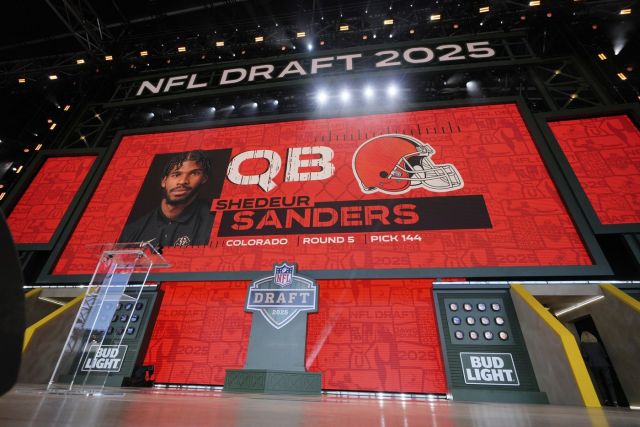
The other major reason behind our A+ grade for the Browns is no surprise: they landed quarterback Shedeur Sanders at No. 144 to close out their seven-pick draft.
Sanders was our No. 5 overall prospect and the top quarterback on the board. With elite accuracy—completing 74% of his passes last season—and remarkable poise under pressure, he has all the tools to succeed at the next level.
In a few years, we may look back on this pick and wonder how the rest of the league let him slip that far.
Cleveland also selected Dillon Gabriel, a pick that initially raised eyebrows. While we’re intrigued by his sleeper potential, relying on a quarterback room of 40-year-old Joe Flacco, twice-traded Kenny Pickett, and Gabriel isn’t an ideal long-term plan.
That said, pairing Gabriel with Shedeur Sanders gives the Browns flexibility as they navigate the post-Watson era. Gabriel’s sharp decision-making and excellent ball placement are qualities worth developing.
Quarterbacks got all the attention, but the Browns quietly crushed it with their early Day 2 picks. Thanks to the Jaguars trade, they kicked off the second round at No. 36 and snagged Carson Schwesinger—a do-it-all linebacker who had first-round buzz.
Schwesinger brings versatility in coverage, run support, and blitz packages. After racking up 115 tackles, four sacks, and two interceptions last season, he projects as a key defensive contributor.
With Jeremiah Owusu-Koramoah recovering from a neck injury, Cleveland’s decision to add Schwesinger—alongside Jordan Hicks and a re-signed Devin Bush—looks both strategic and necessary.
Next came Quinshon Judkins, who stays in-state after transferring to Ohio State, and now gives the Browns a powerful new option in the backfield. With 50 scrimmage touchdowns since 2022, he has a nose for the end zone and the physicality to elevate Cleveland’s ground game.
The Browns also added Dylan Sampson in Round 4, a speedy change-of-pace back who can break away once he finds daylight. After averaging just 94.6 rushing yards per game last season (fourth lowest in the league), Cleveland clearly needed to revamp the run game.
They didn’t stop there, either: the team picked up Harold Fannin Jr., a versatile tight end/H-back who led the nation with 117 receptions last year. His pairing with David Njoku adds another dynamic layer to an evolving offense.
Cleveland Browns Super Bowl Odds After the Draft
The Browns crushed the 2025 draft. But after a tough season, is that enough to spark a real turnaround in 2026? Betting odds still place them fourth from bottom, with only the Titans, Saints, and Giants at odds of winning the Super Bowl in 2026. However, this would change if the Browns can start the season strong.
Trending Now


